Erythrosine
Score impact
-1.00
points/product
Description
Erythrosine, also known as E127, is a synthetic cherry-red colorant belonging to the azo dye group. It is obtained industrially by iodination of fluorescein, a petroleum-derived compound. Chemically, it is the sodium salt of 2',4',5',7'-tetraiodofluorescein.
It appears as a red powder or granules, soluble in water and ethanol, and is stable to light and heat, although it may decolorize in the presence of strong acids. Its main function is to provide an intense red color to foods, especially in products requiring a bright and attractive shade.
It was approved as a food additive in the European Union after initial evaluations in the 1970s, and its use is regulated by Regulation (EC) No 1333/2008. The European Food Safety Authority (EFSA) has reassessed its safety on several occasions, establishing an Acceptable Daily Intake (ADI) of 0.1 mg/kg body weight. The World Health Organization (WHO) has also evaluated erythrosine, confirming the same ADI. Despite its approval, controversy exists due to studies suggesting possible carcinogenic effects in laboratory animals, although evidence in humans is limited.
Overall, it is considered safe within established limits, but moderation in consumption is recommended, especially in children. On food labels, it must appear as "colorant: erythrosine" or "E127". It is important to note that erythrosine is not permitted in organic foods and its use is restricted in some countries outside the EU.
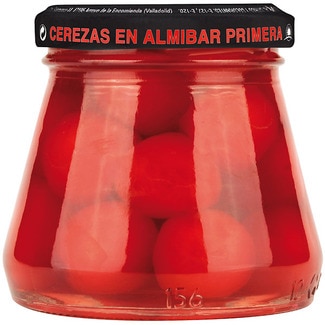
Erythrosine (E127) is mainly used in food products where a bright and stable red color is desired. In the European Union, it is authorized in several food categories according to Regulation (EC) No 1333/2008. The most common uses include: preserved cherries and candied fruits (up to 200 mg/kg), potato-, cereal-, and starch-based snack products (up to 100 mg/kg), and some alcoholic beverages such as vermouths and aromatized wines (up to 100 mg/l). It is also used in ice cream, dairy desserts, sauces and condiments, as well as in fine bakery products.
In the Spanish market, it can be found in maraschino cherries, crystallized fruits, some red fruit soft drinks, and certain industrial pastry products. Maximum limits vary by category, with the highest being for preserved cherries (200 mg/kg). Compared to the US FDA, erythrosine is permitted in foods such as preserved cherries, processed fruits, and some bakery products, but with broader restrictions than in the EU. In Japan, its use is more limited, mainly in preserved fruits and fish products.
It is important to note that erythrosine is not authorized in foods for infants and young children, nor in fresh meat or fish products.
Documented side effects of erythrosine (E127) are mainly based on animal studies and human observations. EFSA and WHO have assessed its safety and established an ADI of 0.1 mg/kg body weight. Studies in rats have shown that high doses can cause thyroid tumors, possibly due to iodine release and disruption of thyroid function. However, evidence in humans is limited and inconclusive. In sensitive individuals, allergic reactions such as urticaria, asthma, or intolerance have been reported, although they are rare.
Erythrosine may interfere with thyroid function by releasing iodine, which could be relevant in people with pre-existing thyroid disorders or those taking thyroid medications. It has also been suggested that it may exacerbate symptoms of attention deficit hyperactivity disorder (ADHD) in children, although the evidence is weak. EFSA concludes that, within established limits, erythrosine does not pose a significant health risk to the general population. However, it recommends caution in children and people with thyroid problems.
WHO agrees that the estimated daily intake is below the ADI for most consumers, so it is considered safe.
- Erythrosine
- FD&C Red No. 3
- CI 45430
- Erythrosine sodium
- Red 3
- Iodoeosin
- Erythrosine disodium salt
- Tetraiodofluorescein sodium
- Food Red 14
- Erythrosine
Products in our Spanish database containing this additive
Examples found in ComerClaro Spanish product database
Product names and supermarket data may appear in Spanish.

Classification:
Statistics
208
total views
Something wrong?
If you notice incorrect or incomplete information, help us improve the platform.