Hydroxypropyl distarch phosphate
Score impact
0.00
points/product
Description
E1442, known as hydroxypropyl distarch phosphate, is a modified starch used as a thickener, stabilizer, and emulsifier in the food industry. It belongs to the category of modified starches, which are native starches (corn, potato, wheat, tapioca) chemically treated to improve their functional properties. Its origin is vegetable, and it is obtained through a modification process that combines two reactions: etherification with propylene oxide (to introduce hydroxypropyl groups) and cross-linking with phosphorus oxychloride or sodium trimetaphosphate (to form phosphate bonds). This treatment gives the starch greater resistance to acidic conditions, high temperatures, and mechanical stress, preventing retrogradation and syneresis (water separation).
E1442 is a white or slightly yellowish powder, tasteless and odorless, that forms viscous and stable gels in cold or hot water. Its main function is to thicken, stabilize, and give texture to foods, improving mouthfeel and preventing phase separation. It is used in a wide variety of products: sauces, soups, dairy desserts, ice cream, bakery products, fillings, infant foods, and processed meat products.
Historically, modified starches began to be developed in the early 20th century, but E1442 was approved in the European Union after evaluations by the European Food Safety Authority (EFSA) and the Joint FAO/WHO Expert Committee on Food Additives (JECFA). EFSA has reassessed its safety several times, establishing an Acceptable Daily Intake (ADI) of "not specified," meaning it is not considered a health risk in the amounts normally consumed. WHO has also evaluated it and found no significant adverse effects.
In the EU, its use is regulated by Regulation (EC) No 1333/2008, which sets maximum limits for each food category. In general, it is considered a safe additive for the general population, including children and adults. On labeling, it must appear as "hydroxypropyl distarch phosphate" or with its E number (E1442).
Although there are no major controversies, some consumers prefer to avoid modified starches due to their chemical processing, but scientific evaluations confirm their safety.
E1442 is used in numerous food categories as a thickener, stabilizer, and emulsifier. According to Regulation (EC) No 1333/2008, it is authorized in a wide range of products with limits varying by category. For example, in sauces and condiments (category 12.6) it may be used quantum satis (no specific maximum limit, but subject to good manufacturing practices). In dairy products such as yogurts and desserts (category 01.4) it is also allowed quantum satis. In ice cream (category 03) its use is common to improve texture and prevent ice crystals. In fine bakery products (category 07.2) it is used to retain moisture and give fluffiness. In infant foods (category 13.1) it is allowed with specific limits (up to 50 g/kg in some cases).
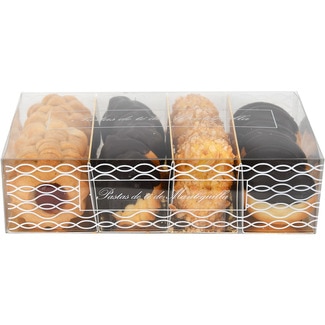
Examples of products on the Spanish market containing E1442: tomato sauces, instant soups, custards, flans, ice cream, sliced bread, and sausages. In comparison with the FDA, the United States also allows the use of modified starches such as hydroxypropyl distarch phosphate (considered GRAS - Generally Recognized as Safe) without specific limits, provided they meet purity specifications. Japan also authorizes it, although with some additional restrictions.
Overall, E1442 is one of the most widely used modified starches globally due to its versatility and stability.
Toxicological studies conducted by EFSA and JECFA have not identified significant adverse effects associated with the consumption of E1442 in usual amounts. The ADI is classified as "not specified," indicating no evidence of toxicity even at high intake levels. Modified starches, including E1442, are partially digested in the small intestine and the remainder ferments in the colon, producing short-chain fatty acids, similar to dietary fiber.
No side effects such as allergies, intolerances, or interactions with medications have been documented. However, some people with severe digestive diseases (such as ulcerative colitis or Crohn's disease) might experience mild discomfort if they consume large amounts, but no specific studies confirm this. In the general population, consumption of E1442 is considered safe.
EFSA has evaluated dietary exposure and concludes that it does not exceed safe levels. There is no evidence of carcinogenicity, mutagenicity, or reproductive toxicity.
Therefore, there are no documented side effects that require additional precaution.
- Hydroxypropyl distarch phosphate
- Hydroxypropylated distarch phosphate
- Hydroxypropyl starch phosphate
- Hydroxypropyl diphosphate starch
Products in our Spanish database containing this additive
Examples found in ComerClaro Spanish product database
Product names and supermarket data may appear in Spanish.


Classification:
Statistics
258
total views
Something wrong?
If you notice incorrect or incomplete information, help us improve the platform.