Plain caramel
Score impact
0.00
points/product
Description
E150, known as plain caramel, is a natural food color obtained by controlled heating of carbohydrates (usually sucrose, glucose or fructose) in the presence of acids or bases. This process, called caramelization, produces a complex mixture of compounds such as caramelans, caramelens and caramelins, which give it its characteristic brown color.
Unlike class III and IV caramels (E150c and E150d), E150 does not use ammonium compounds or sulfites, so it is considered the simplest and safest. Its origin dates back to ancient times, when it was used to color foods in an artisanal way.
In the European Union, it was approved as a food additive after evaluations by EFSA and WHO, which established that it poses no health risks at usual doses. EFSA, in its 2011 re-evaluation, confirmed that E150 is not genotoxic or carcinogenic, and no specific Acceptable Daily Intake (ADI) has been set, as its consumption does not pose a hazard. WHO, through JECFA, also considers it safe.
On labeling, it must appear as 'color: plain caramel' or 'E150'. Although it is a widely used food additive, its food safety is supported by decades of studies. However, some consumers may choose to avoid it for personal preferences, but not due to documented risks.
In summary, E150 is a natural, stable and safe color with a favorable toxicological profile.
E150 is mainly used in the food industry to provide brown or amber color to a wide variety of products. According to Regulation EC 1333/2008, its use is authorized in numerous categories, such as alcoholic beverages (rum, whiskey, beer), vinegars, sauces, soups, confectionery, ice cream, desserts, bakery and pastry products, and certain dairy products.
In the Spanish market, it is commonly found in cola soft drinks (although these usually use E150d), dark beers, balsamic vinegar, soy sauces, candies, and industrial baked goods. Usage limits are 'quantum satis' (sufficient amount to achieve the desired effect) in most cases, without a numerical maximum, reflecting its low toxicity. Compared to the FDA, which also classifies it as GRAS (Generally Recognized as Safe), and Japan, where it is allowed without significant restrictions, European regulation is similar. However, the EU requires clear labeling to inform the consumer.
E150 is especially valued for its stability to light, heat and pH changes, making it suitable for industrial processes.
Toxicological studies on E150 (plain caramel) have not documented significant adverse effects in humans at usual consumption doses. EFSA, in its 2011 opinion, concluded that there is no evidence of genotoxicity, carcinogenicity or reproductive toxicity.
The biological mechanism of caramelization produces compounds such as 5-hydroxymethylfurfural (HMF), but in very low amounts and without toxicological relevance. No specific sensitive populations have been identified, although people with very rare allergies to Maillard reaction products could present reactions, but there are no documented cases. No interactions with drugs are known. WHO, through JECFA, has established that it is not necessary to set an ADI, as the safety margin is wide.
In conclusion, E150 is considered safe for the general population, and no adverse side effects have been reported at authorized use levels. Any contrary claims lack scientific support.
- Natural caramel
- Sugar caramel
- Caramel color
Products in our Spanish database containing this additive
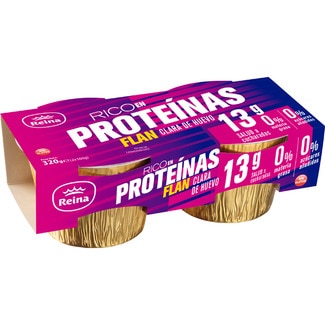
Examples found in ComerClaro Spanish product database
Product names and supermarket data may appear in Spanish.


Classification:
Statistics
231
total views
Something wrong?
If you notice incorrect or incomplete information, help us improve the platform.