Sodium malates
Score impact
0.00
points/product
Description
The food additive E350, known as sodium malates, is a sodium salt of malic acid, an organic acid naturally present in many fruits, especially apples. It belongs to the category of acidity regulators, whose main function is to regulate the pH of foods, providing a mild sour taste and improving product stability.
Industrially, E350 is obtained by neutralizing malic acid with sodium hydroxide or sodium carbonate. Malic acid can be produced by chemical synthesis or by microbial fermentation from renewable sources. Physicochemical properties include high solubility in water and the ability to form buffer solutions, making it useful in a wide range of foods. E350 acts as an acidity regulator, flavor enhancer, and metal sequestrant, contributing to color and texture preservation.
Its use in the European Union has been authorized since the 1990s, following evaluations by EFSA (European Food Safety Authority) and JECFA (Joint FAO/WHO Expert Committee on Food Additives). EFSA has established an Acceptable Daily Intake (ADI) of 0-30 mg/kg body weight for malic acid and its salts, expressed as malic acid. This ADI is considered safe for the general population, including children and adults. WHO also endorses this assessment.
Regarding labeling, E350 must be declared in the ingredient list with its name or E code, followed by its function. Globally, it is considered a safe additive with a favorable toxicological profile and no evidence of significant adverse effects at authorized doses. However, as with any additive, it is important to respect established limits to ensure food safety.
E350 is mainly used in products requiring precise pH control and a mild sour taste. Authorized food categories according to Regulation EC 1333/2008 include: non-alcoholic beverages (soft drinks, juices), confectionery (candies, gummies), jams, jellies, baked goods, sauces, dressings, canned fruits and vegetables, and processed meat products.
In the Spanish market, it is found in fruit drinks, gelatins, fruit yogurts, ice creams, and some industrial bakery products. Authorized limits vary by category; for example, in non-alcoholic beverages it can reach up to 3 g/L, while in confectionery up to 5 g/kg is allowed. Compared to the FDA, the United States also permits the use of sodium malates as a GRAS (Generally Recognized As Safe) additive without specific limits, but subject to good manufacturing practices. Japan authorizes it with restrictions similar to the EU.
The versatility of E350 makes it a popular alternative to citric acid and other acidulants, especially when a milder, less aggressive taste is desired.
Sodium malates (E350) have been evaluated by EFSA and JECFA, concluding that they pose no significant health risks at authorized doses. No direct adverse effects attributable to E350 have been documented in humans. Toxicological studies in animals have shown that malic acid and its salts are metabolized similarly to endogenous organic acids, without accumulation or toxicity.
The sodium present in the additive may be relevant for people with hypertension or those on low-sodium diets, but the amount contributed by E350 is generally low compared to total sodium intake. No interactions with medications or particularly sensitive populations have been identified, except for possible rare allergic reactions (not documented in scientific literature).
EFSA, in its 2013 re-evaluation, confirmed that there is no toxicological concern and that the established ADI is adequate. WHO supports this conclusion.
In summary, E350 is considered safe for human consumption within established limits, and no significant adverse side effects have been reported.
- Disodium malate
- Monosodium malate
- Sodium salt of malic acid
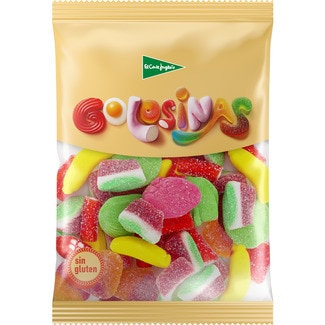
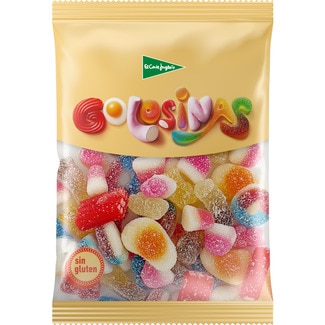
Products in our Spanish database containing this additive
Examples found in ComerClaro Spanish product database
Product names and supermarket data may appear in Spanish.

Classification:
Statistics
229
total views
Something wrong?
If you notice incorrect or incomplete information, help us improve the platform.