Konjac
Score impact
+0.10
points/product
Description
The food additive E425, known as Konjac, is a natural thickener, gelling agent, and stabilizer. It is obtained from the root of the Amorphophallus konjac plant, native to Asia. Industrially, the root is dried and ground to obtain konjac flour, which is then processed to extract glucomannan, a water-soluble polysaccharide. Glucomannan is the main component of E425 and gives it its thickening and gelling properties.
E425 is a white or slightly yellowish powder, odorless and tasteless, that forms thermoreversible gels in the presence of calcium ions. Its main function is to thicken, gel, and stabilize foods, improving texture and consistency. It is also used as a fat substitute and to reduce the caloric content of products. Konjac has been used in Asian cuisine for centuries, especially in Japan, where it is consumed in the form of noodles (shirataki) and jellies.
In the European Union, it was approved as a food additive in 1998 and is regulated by Regulation (EC) No 1333/2008. The European Food Safety Authority (EFSA) has evaluated E425 several times, most recently in 2017, establishing an Acceptable Daily Intake (ADI) of 0-3 mg/kg body weight for glucomannan. The World Health Organization (WHO) has also evaluated konjac and established a similar ADI.
Regarding food safety, E425 is considered safe for the general population at authorized doses. However, cases of choking have been reported from consuming products containing konjac in gel form, especially in children and the elderly, due to its ability to swell rapidly in contact with liquids. Therefore, the EU requires warning labels on products containing E425 in gel form. On labels, E425 may appear as 'konjac', 'konjac flour', or 'konjac glucomannan'.
In summary, E425 is a safe and widely used additive with a long history of use in Asia and a positive evaluation by European authorities.
E425 (Konjac) is used in a wide variety of food categories as a thickener, gelling agent, and stabilizer.
In the Spanish market, it is found in products such as dairy desserts (yogurts, custards), ice cream, sauces, soups, processed meat products (sausages, pâtés), and bakery products. It is also used in dietetic foods and meal replacements for its ability to reduce calories. Authorized limits in the EU vary by food category according to Regulation (EC) 1333/2008. For example, in dairy desserts up to 10 g/kg is allowed, in ice cream up to 5 g/kg, and in sauces up to 20 g/kg. In Japan, konjac is traditionally consumed in the form of noodles and jellies, and its use is widespread.
The US FDA classifies konjac glucomannan as GRAS (Generally Recognized as Safe) for certain uses, although with restrictions similar to European ones regarding gel products. In the EU, products containing E425 in gel form must carry a choking hazard warning. Additionally, E425 is used in the pharmaceutical and cosmetic industries, but in food its main function is to improve texture and stability of products.
E425 (Konjac) is considered safe for the general population at authorized doses. However, adverse effects have been documented mainly related to its ability to swell in contact with liquids. The main risk is choking, especially in young children and the elderly, when consuming products containing konjac in gel form (such as konjac jellies).
These products can adhere to the throat and obstruct airways. Therefore, the EU requires warning labels and, in some cases, has banned the sale of konjac jellies of certain sizes. Other reported side effects include gastrointestinal discomfort such as bloating, flatulence, and diarrhea, especially when consumed in large amounts.
The biological mechanism is due to glucomannan being a soluble fiber that ferments in the colon, producing gas. No significant interactions with medications have been reported, although theoretically it could delay absorption of some drugs due to its gelling effect.
EFSA, in its 2017 evaluation, concluded that E425 poses no genotoxic or carcinogenic risks, and that the established ADI is safe. The WHO also supports its safety.
In summary, side effects are mild and mainly related to excessive consumption or dangerous presentation forms (gels). For most consumers, E425 is a safe additive.
- Konjac glucomannan
- Konjac flour
- Konjac gum
- Konjac mannan
- Amorphophallus konjac extract
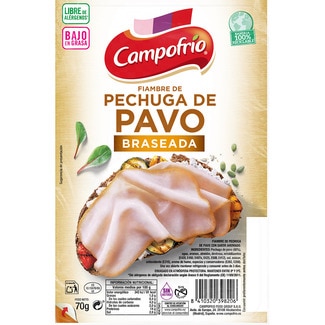
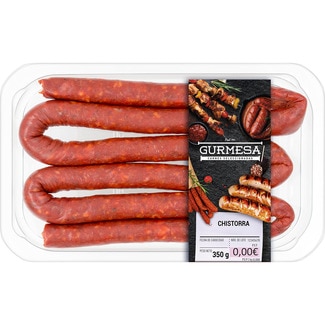
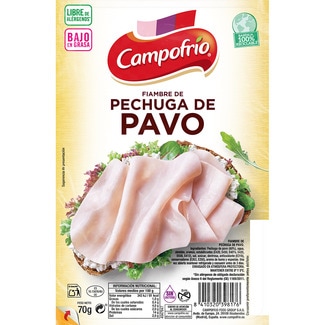
Products in our Spanish database containing this additive
Examples found in ComerClaro Spanish product database
Product names and supermarket data may appear in Spanish.
Classification:
Statistics
290
total views
Something wrong?
If you notice incorrect or incomplete information, help us improve the platform.