Triphosphates
Score impact
-0.10
points/product
Description
The food additive E451, known as triphosphates, belongs to the category of stabilizers and also acts as an emulsifier, sequestrant, and acidity regulator. Chemically, triphosphates are sodium or potassium salts of triphosphoric acid (pentaphosphoric acid). Their origin is synthetic, obtained by thermal condensation of orthophosphates.
Industrially, they are produced by controlled dehydration of phosphates at high temperatures, followed by neutralization with sodium or potassium hydroxides. Physicochemical properties include high solubility in water, ability to chelate metal ions (such as calcium and magnesium), and stabilize emulsions. Their main function is to retain water in meat and fish products, improving texture and juiciness, and to prevent syneresis in dairy products.
The history of their use dates back to the mid-20th century, and they were approved in the European Union as a safe additive. The European Food Safety Authority (EFSA) has evaluated triphosphates on several occasions, establishing an Acceptable Daily Intake (ADI) of 40 mg/kg body weight (expressed as phosphorus). The World Health Organization (WHO) has also endorsed this ADI.
Overall safety assessment indicates that, within authorized limits, they pose no health risk. On labeling, they must appear as "triphosphates" or "E451", and sometimes as "sodium triphosphate" or "potassium triphosphate". Food safety is guaranteed by EFSA evaluations, which consider actual exposure levels in the population.
E451 is mainly used in processed meat products (sausages, cooked ham, cold cuts), fish products (surimi, frozen fish), dairy products (processed cheese, creams), and industrial bakery products.
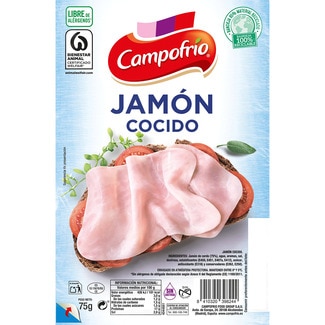
In the Spanish market, it is commonly found in brands of cooked ham, frankfurter sausages, crab sticks (surimi), and sliced cheese. The authorized limits under EC Regulation 1333/2008 vary by category: in processed meats, up to 5 g/kg (expressed as P2O5); in frozen fish, up to 1 g/kg; in processed cheese, up to 20 g/kg. In comparison, the FDA allows the use of triphosphates in meat and poultry under the category of "substances that retain moisture", with similar limits. Japan also authorizes them in meat and fish products, with analogous restrictions.
The main function is to improve water-holding capacity, which reduces weight loss during cooking and improves texture.
Documented side effects of triphosphates are mainly related to excessive phosphorus consumption, which can alter the calcium-phosphorus balance in the body. Animal studies have shown that very high doses can cause renal and bone calcification. In humans, chronic intake of high amounts of phosphates has been associated with an increased risk of cardiovascular and kidney disease, especially in people with chronic kidney disease. The biological mechanism involves excess phosphorus binding to calcium, forming deposits in soft tissues. Sensitive populations include people with chronic kidney disease, who should limit their phosphorus intake. It has also been suggested that phosphates may interfere with iron and zinc absorption, although evidence is limited. No significant interactions with medications have been documented, except in patients taking phosphate binders. EFSA and WHO conclude that, at current exposure levels (ADI of 40 mg/kg/day), triphosphates do not pose a health risk to the general population. There is no evidence of carcinogenicity, mutagenicity, or reproductive toxicity at permitted doses.
- Sodium triphosphate
- Potassium triphosphate
- Sodium pentaphosphate
- Potassium pentaphosphate
- Sodium triphosphate
- Potassium triphosphate
Products in our Spanish database containing this additive
Examples found in ComerClaro Spanish product database
Product names and supermarket data may appear in Spanish.

Classification:
Statistics
312
total views
Something wrong?
If you notice incorrect or incomplete information, help us improve the platform.