Sodium, potassium and calcium salts of fatty acids
Score impact
0.00
points/product
Description
The food additive E470a, also known as sodium, potassium and calcium salts of fatty acids, is an emulsifier widely used in the food industry. It consists of salts of fatty acids (mainly stearic, palmitic, oleic and lauric acids) with sodium, potassium or calcium. Its origin can be both animal (pig, cow fats) and vegetable (palm, coconut, sunflower oils), although vegetable sources currently predominate.
Industrially, it is obtained by saponification of fats and oils with sodium, potassium or calcium hydroxide, followed by purification and drying. Physicochemical properties vary depending on the cation: sodium and potassium salts are water-soluble, while calcium salts are insoluble. They act as emulsifiers, stabilizers and texture agents, improving the homogeneity of water and fat mixtures. Their main function is to reduce surface tension between phases, allowing the formation of stable emulsions.
The history of its use dates back to the early 20th century, and it was approved in the European Union as a safe additive after evaluations by EFSA (European Food Safety Authority) and WHO (World Health Organization). EFSA has established an Acceptable Daily Intake (ADI) of 25 mg/kg body weight per day for the sum of all fatty acid salts (E470a and E470b). WHO also considers it safe at the levels used.
Regarding food safety, E470a is generally recognized as safe (GRAS) by the US FDA. In labeling, it must appear as 'sodium, potassium and calcium salts of fatty acids' or with the number E470a. No significant adverse effects in humans have been reported at authorized doses, and its metabolism follows the normal pathways of fatty acids and mineral salts.
E470a is mainly used as an emulsifier, stabilizer and texture agent in a wide variety of foods. According to EC Regulation 1333/2008, it is authorized in categories such as fine bakery products (cakes, cookies), cocoa and chocolate products, ice cream, emulsified sauces, processed meat products, soups and broths, and food supplements.
In the Spanish market, it is found in margarines, cocoa creams, sliced bread, industrial pastries, custards, flans, and some delicatessen products. Maximum limits vary by category: for example, in fine bakery up to 10 g/kg, in ice cream up to 5 g/kg, and in emulsified sauces up to 10 g/kg. Compared to the FDA, which considers it GRAS without specific limits, the EU sets more restrictive limits. In Japan, its use is permitted with restrictions similar to European ones.
It is important to note that E470a may appear combined with other emulsifiers such as lecithin (E322) or mono- and diglycerides (E471).
Documented side effects of E470a are scarce and generally mild. EFSA and WHO have evaluated its safety and conclude that there is no evidence of acute, subchronic or chronic toxicity at use levels. Animal studies have shown no carcinogenic, genotoxic or teratogenic effects.
In humans, no significant adverse reactions have been reported, although in people with sensitivity to calcium salts (such as in hypercalcemia) there could be a theoretical risk if large amounts are consumed, but the doses in foods are very low. The biological mechanism is simple: fatty acids are absorbed and metabolized like any fat, and the cations (sodium, potassium, calcium) are handled by normal body pathways. Sensitive populations include people with kidney failure who must control potassium, but the amounts contributed by the additive are minimal.
No interactions with medications are known. The conclusion of EFSA and WHO is that E470a is safe under authorized conditions of use, without the need to establish a specific ADI for each salt, but a group ADI of 25 mg/kg bw/day for the sum of E470a and E470b. In summary, there are no concerning side effects for the general population.
- Fatty acid salts
- Sodium salts of fatty acids
- Potassium salts of fatty acids
- Calcium salts of fatty acids
- Calcium soaps
- Sodium soaps
- Potassium soaps
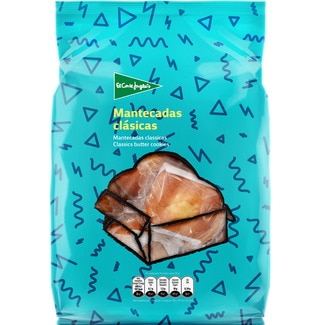
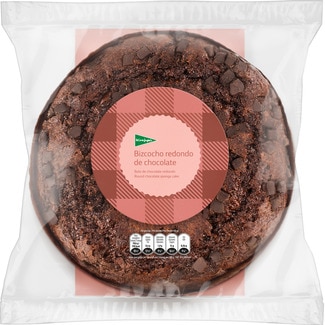
Products in our Spanish database containing this additive
Examples found in ComerClaro Spanish product database
Product names and supermarket data may appear in Spanish.

Classification:
Statistics
235
total views
Something wrong?
If you notice incorrect or incomplete information, help us improve the platform.