Propane-1,2-diol esters of fatty acids
Score impact
0.00
points/product
Description
The food additive E477, known as propane-1,2-diol esters of fatty acids, is an emulsifier used in the food industry to improve the texture and stability of products. It is obtained by esterification of propane-1,2-diol (a diol alcohol) with fatty acids of vegetable or animal origin.
Industrially, the reaction is carried out at high temperatures in the presence of catalysts, yielding a mixture of monoesters and diesters. Physically, it appears as a waxy solid or viscous liquid ranging from white to light yellow, with a variable melting point depending on the fatty acid composition.
It is soluble in fats and oils, and insoluble in water. Its main function is to act as an emulsifier, stabilizer, and texturizing agent, allowing the homogeneous mixing of ingredients that normally do not combine, such as water and oil. It can also act as a coating agent and antifoaming agent.
E477 was approved as a food additive in the European Union following evaluations by the European Food Safety Authority (EFSA) and the Joint FAO/WHO Expert Committee on Food Additives (JECFA). EFSA established an Acceptable Daily Intake (ADI) of 25 mg per kilogram of body weight per day, based on toxicity studies that showed no significant adverse effects.
The food safety of E477 is supported by numerous studies indicating that it is completely metabolized in the body, breaking down into fatty acids and propane-1,2-diol, which are natural metabolic compounds. No carcinogenic, mutagenic, or teratogenic effects have been reported at permitted doses. On labeling, it must appear as "propane-1,2-diol esters of fatty acids" or by its E number.
In summary, E477 is a safe and effective additive widely used in the European food industry.
E477 is used in a wide variety of food categories as an emulsifier and stabilizer. According to Regulation EC 1333/2008, it is authorized in fine bakery products (such as cakes and cookies), dairy products (whipped cream, ice cream, dairy desserts), emulsified sauces (mayonnaise, dressings), cocoa and chocolate products, and milk substitutes.
In the Spanish market, it is found in margarines, spreads, industrial ice cream, and packaged pastries. Maximum limits vary by category: for example, in fine bakery products up to 10 g/kg, in ice cream up to 5 g/kg, and in emulsified sauces up to 10 g/kg. Compared to the US FDA, E477 is classified as "Generally Recognized as Safe" (GRAS) for certain uses, with similar limits. Japan also permits it, although with restrictions in some products.
The versatility of E477 makes it a common additive in the food industry to improve texture and prevent phase separation.
Toxicological studies conducted by EFSA and JECFA have not documented significant adverse effects associated with the consumption of E477 at permitted doses. The compound has been observed to be completely hydrolyzed in the gastrointestinal tract, releasing fatty acids and propane-1,2-diol, which are metabolized naturally. In animal studies, very high doses (exceeding 1000 mg/kg bw/day) caused diarrhea and increased liver weight, but these effects are not relevant to human exposure.
No allergies, sensitization, or drug interactions have been reported. Sensitive populations, such as children or pregnant women, do not present additional risks within the ADI. EFSA concludes that E477 is not genotoxic or carcinogenic.
Therefore, it is considered safe for human consumption at authorized levels.
- Propylene glycol esters of fatty acids
- Propane-1,2-diol monoesters and diesters of fatty acids
- Propylene glycol fatty acid esters
- Propylene glycol esters
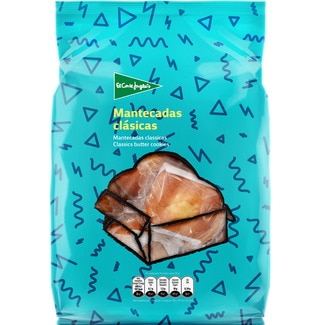
Products in our Spanish database containing this additive
Examples found in ComerClaro Spanish product database
Product names and supermarket data may appear in Spanish.


Classification:
Statistics
235
total views
Something wrong?
If you notice incorrect or incomplete information, help us improve the platform.