Sorbitan monostearate
Score impact
0.00
points/product
Description
Sorbitan monostearate (E492) is a widely used food additive emulsifier in the food industry. It belongs to the family of sorbitan esters, obtained by esterification of sorbitol (a sugar alcohol) with fatty acids, in this case stearic acid.
Industrially, it is produced by reacting sorbitol with stearic acid at high temperatures, followed by purification. It is a waxy solid, white or cream-colored, with a melting point between 50-60 °C, insoluble in water but dispersible in oils. Its main function is to stabilize water-in-oil (W/O) and oil-in-water (O/W) emulsions, improving texture and preventing phase separation. It also acts as a coating agent and antifoaming agent.
E492 was approved as a food additive in the European Union after evaluations by the European Food Safety Authority (EFSA) and the Joint FAO/WHO Expert Committee on Food Additives (JECFA). EFSA established an Acceptable Daily Intake (ADI) of 0-25 mg/kg body weight, based on toxicological studies that showed no significant adverse effects. WHO also considers it safe at authorized levels. In food labeling, it must appear as "sorbitan monostearate" or "E492".
Regarding food safety, E492 has been the subject of numerous studies. It has not been associated with carcinogenicity, mutagenicity, or reproductive toxicity in animals. In humans, no relevant adverse effects have been reported at usual consumption levels. However, some individuals may experience mild digestive discomfort if consumed in large amounts, although this is uncommon.
EFSA concludes that E492 is safe for the general population, including children and the elderly, provided that the established limits are respected.
E492 is mainly used as an emulsifier in a wide variety of foods. According to Regulation EC 1333/2008, it is authorized in categories such as: cocoa and chocolate products (up to 10 g/kg), fine bakery products (up to 10 g/kg), emulsified sauces (up to 5 g/kg), ice cream (up to 5 g/kg), and milk substitutes (up to 5 g/kg).
In the Spanish market, it is found in chocolates, cocoa creams, industrial pastries, margarines, mayonnaise, and salad dressings. It is also used in confectionery products and coatings. Comparatively, the FDA approves it as GRAS (Generally Recognized as Safe) with similar limits, while in Japan its use is permitted but with stricter restrictions in certain products. The ADI of 0-25 mg/kg is widely accepted internationally.
Toxicological studies conducted by EFSA and JECFA indicate that E492 does not produce significant adverse effects at authorized doses. In animals, no carcinogenic, mutagenic, or teratogenic effects were observed. In humans, there is no evidence of specific allergic reactions or intolerances.
The biological mechanism of sorbitan monostearate is mainly physical: it acts on the surface of fat droplets without being significantly metabolized. It is mostly excreted unchanged. Sensitive populations such as children or the elderly do not present special risks. No interactions with medications are known. EFSA concludes that E492 is safe at current use levels, and WHO supports this assessment.
Therefore, no relevant side effects for human health are considered.
- Sorbitan monostearate
- Sorbitan ester of stearic acid
- Sorbitan monostearate
- Span 60
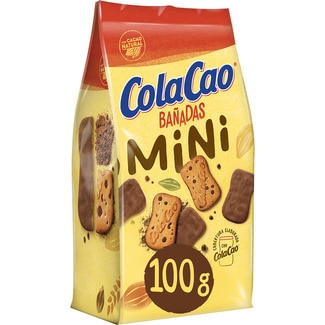
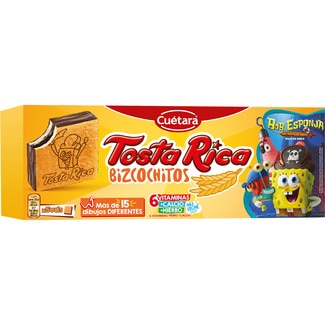
Products in our Spanish database containing this additive
Examples found in ComerClaro Spanish product database
Product names and supermarket data may appear in Spanish.

Classification:
Statistics
220
total views
Something wrong?
If you notice incorrect or incomplete information, help us improve the platform.