Carbonates (obsolete)
Score impact
0.00
points/product
Description
Before we begin, it is essential to make a crucial scientific and regulatory clarification: The code E502 (historically assigned to "ammonium carbonates" or generic carbonate mixtures) does not currently exist as an individual authorized additive in the official list of the European Union (Regulation EC 1333/2008) or in the Codex Alimentarius. The industry and health authorities have broken down and reorganized these substances into specific and more precise codes, mainly E500 (sodium carbonates), E501 (potassium carbonates), and E503 (ammonium carbonates). Nevertheless, we will present the information we have been able to obtain about this additive.
The food additive code E502 historically refers to a generic designation used to group certain carbonates, mineral substances used in food technology mainly as acidity correctors and raising agents. In modern additive chemistry and under the current regulatory frameworks of the European Union and the Codex Alimentarius, the code E502 is considered obsolete and out of use.
International food legislation chose to eliminate this ambiguous category to require a much more precise and transparent declaration on labeling, forcing manufacturers to specify the specific salts used in their formulas.
Chemically, the compounds that were encompassed under this spectrum are alkaline mineral salts derived from carbonic acid. Their primary technological function was to interact with the acidic components of food matrices to release carbon dioxide (CO2) under the action of heat, acting as chemical leavening agents in stable doughs.
Currently, the substances that made up this group are correctly distributed and indexed individually: sodium carbonates under code E500, potassium carbonates under E501, ammonium carbonates under E503, and magnesium carbonates under E504.
From a food safety perspective, the toxicological profile of the carbonates that constituted the former E502 group is completely innocuous. The European Food Safety Authority (EFSA) and the joint JECFA committee (FAO/WHO) have independently evaluated each of the derived salts, concluding that it is not necessary to establish a numerical Acceptable Daily Intake (ADI).
Being minerals of direct and natural biological processing by the body, they are authorized under the quantum satis principle in their current valid codes.
Because the code E502 is no longer legally assigned to any active additive in the European Union, its presence in modern processed foods is non-existent under that specific nomenclature. Historically, and through the substances that replace it today, these chemical compounds have been indispensable in the baking and biscuit industry. Their main purpose is to act as leavening agents, allowing doughs for cookies, cakes, and industrial pastry products to develop the necessary volume and internal porosity during baking.
In the current Spanish market, if a consumer finds the initials E502 on a label, it is generally due to a printing error, an imported product with outdated regulations, or an old classification in distribution databases. In major supermarket chains such as Mercadona, Carrefour, or Lidl, homologous products require by law the use of current subcategories (such as E500ii or E503ii).
According to Regulation EC 1333/2008, any technical use of carbonates as stabilizers in dairy products, pH correctors in soft drinks, or anti-caking agents in powdered foods must be declared with its current individualized code, ensuring traceability in the global food supply chain.
From a strictly medical and biological perspective, the substances associated with the former code E502 lack negative side effects for the human body within industrial usage margins. When ingested through food, carbonates rapidly dissociate in the stomach upon contact with hydrochloric acid in gastric juice, producing chlorinated salts (sodium or potassium chloride), water, and free carbon dioxide gas that is eliminated naturally through belching or intestinal absorption.
Extensive clinical studies compiled by international agencies absolutely rule out any mutagenic, carcinogenic, or reproductive toxicity potential.
Being simple mineral compounds, they have no allergenic capacity and do not interact negatively with the immune system. The only relevant clinical consideration linked to these salts is limited to their secondary mineral contribution; for example, sodium variants (E500) add sodium to the total dietary intake, a controllable aspect for people with strict hypertension, while potassium variants (E501) should be monitored in patients with severe renal insufficiency. However, under normal food use, they represent a negligible risk to consumer health.
- Carbonates (obsolete generic designation)
- Mixture of carbonates and bicarbonates
- Carbonates (functional class)
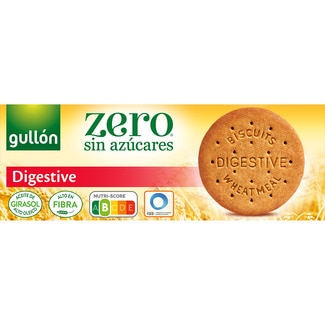
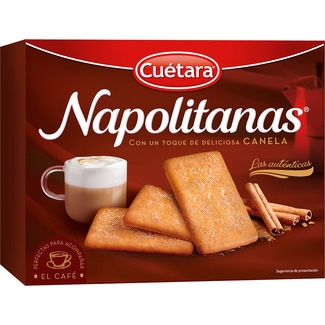
Products in our Spanish database containing this additive
Examples found in ComerClaro Spanish product database
Product names and supermarket data may appear in Spanish.

Classification:
Statistics
185
total views
Something wrong?
If you notice incorrect or incomplete information, help us improve the platform.