Ammonium carbonates
Score impact
0.00
points/product
Description
The food additive E503, known as ammonium carbonates, is an inorganic compound primarily used as a leavening agent in bakery and pastry products. Its origin is synthetic, although it is also found naturally in the atmosphere and in some biological processes.
Industrially, it is obtained by reacting carbon dioxide with aqueous ammonia, or by thermal decomposition of ammonium carbonate. It appears as a white powder or granules, with a slight ammonia odor. It is soluble in water but insoluble in ethanol.
Its main function is to release carbon dioxide (CO₂) and ammonia (NH₃) when heated, which causes dough and cookies to rise. Unlike sodium bicarbonate, it leaves no alkaline residue, making it ideal for low-moisture products.
Historically, ammonium carbonates were already used in ancient times as a chemical leavening agent. In the European Union, its use has been approved since the first additive lists and is governed by Regulation (EC) No 1333/2008. The European Food Safety Authority (EFSA) has evaluated E503 several times, most recently in 2018, concluding that there are no safety concerns at authorized use levels.
The World Health Organization (WHO) and the Joint FAO/WHO Expert Committee on Food Additives (JECFA) have also evaluated it, establishing that it is not necessary to set an Acceptable Daily Intake (ADI) due to its low toxicity and because it decomposes during baking. Regarding food safety, E503 is considered safe for the general population, although it can generate traces of ammonia that, at high concentrations, could be irritating. However, levels in foods are very low.
On labeling, it must appear as "ammonium carbonates" or "E503."
In summary, it is an effective and safe additive within established limits.
E503 is mainly used as a leavening agent in bakery and pastry products, especially those with low moisture such as cookies, crackers, dry sponge cakes, wafers, and waffles. It is also used in the production of some chocolates and cocoa products to control acidity.
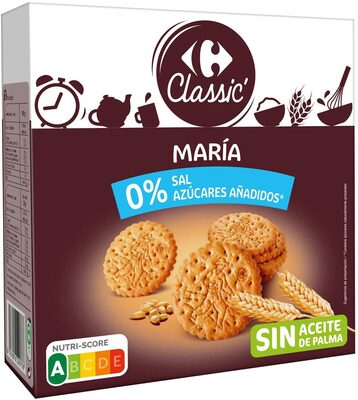
In the Spanish market, it is commonly found in Maria-type cookies, salty crackers, and in homemade pastry mixes. According to Regulation (EC) No 1333/2008, its use is authorized in the EU in categories such as "fine bakery wares" (cookies, wafers, waffles) with a quantum satis limit (sufficient amount to achieve the desired effect). In other categories such as "chocolates" and "cocoa products," it is also allowed quantum satis.
Compared to the US FDA, ammonium carbonates are classified as GRAS (Generally Recognized as Safe) and used in similar products. In Japan, their use is permitted in cookies and sponge cakes. There are no significant differences in limits, as in all cases their use is allowed without specific quantitative restrictions, provided good manufacturing practices are followed.
Ammonium carbonates (E503) are considered safe for human consumption in the amounts used in foods. Toxicological studies have not shown significant adverse effects. During baking, E503 decomposes into CO₂, NH₃, and water. Residual ammonia is minimal and poses no health risk. EFSA, in its 2018 opinion, concluded that there is no safety concern for the general population, including children and the elderly.
No side effects such as specific allergies or intolerances have been documented. However, in people with severe liver or kidney failure, the ability to metabolize ammonia could be compromised, although ingested amounts are negligible. No interactions with medications are known. WHO/JECFA did not establish an ADI, indicating that consumption at normal levels poses no risk. In summary, E503 is a safe and well-tolerated additive.
- Ammonium carbonate
- Ammonium bicarbonate
- Ammonium hydrogen carbonate
- Ammonium carbonate salt
- Volatile salt
- Ammonium carbonate
Products in our Spanish database containing this additive
Examples found in ComerClaro Spanish product database
Product names and supermarket data may appear in Spanish.


Classification:
Statistics
303
total views
Something wrong?
If you notice incorrect or incomplete information, help us improve the platform.