Anthocyanins
Score impact
+0.40
points/product
Description
The food additive E163, known as Anthocyanins, is a natural plant-based colorant belonging to the flavonoid group. It occurs naturally in red, blue, or purple fruits and vegetables such as grapes, blueberries, raspberries, cherries, eggplants, and red cabbage. Industrially, it is obtained by extraction with water or organic solvents (e.g., ethanol) from food industry by-products such as grape pomace or eggplant skin. The extract is concentrated and purified using filtration and evaporation techniques, yielding a red to bluish-purple powder or liquid.
Anthocyanins are pH-sensitive: in acidic medium they are red, in neutral violet, and in alkaline blue. They are also thermolabile and degrade with light and oxygen. Their main function is to provide color to foods, replacing synthetic colorants.
Their use as a food additive dates back to ancient times, but it was approved in the European Union following Directive 94/36/EC and is currently regulated by Regulation (EC) 1333/2008. EFSA has evaluated anthocyanins several times, most recently in 2013, establishing an Acceptable Daily Intake (ADI) of 0-2.5 mg/kg body weight per day for anthocyanin extracts from certain sources. WHO, through JECFA, has also evaluated them and considers there are no safety concerns at current usage levels.
Regarding food safety, anthocyanins are considered safe, with no known adverse effects in humans at usage doses. On labels, they may appear as "E163", "Anthocyanins", or "Natural colorant".
It is important to note that anthocyanins not only provide color but also have antioxidant properties, although these are not necessarily preserved in processed foods.
E163 is used in a wide variety of food categories, especially where a natural red, blue, or violet color is desired. According to Regulation (EC) 1333/2008, it is authorized in non-alcoholic beverages (such as soft drinks, juices, and nectars), dairy products (yogurts, dairy desserts, ice cream), confectionery (gummies, candies, chewing gum), jams, jellies, compotes, fine bakery products, sauces, soups, and food supplements.
In the Spanish market, it is found in brands such as Danone (fruit yogurts), Pascual (milkshakes), and in beverages like Kas or Trina (fruit soft drinks). Authorized limits vary by category: for example, in non-alcoholic beverages the limit is 150 mg/L, in yogurts 100 mg/kg, and in confectionery 200 mg/kg. Compared to the FDA, in the United States anthocyanins are classified as "Generally Recognized as Safe" (GRAS) and have no specific limits, although they are used in similar amounts. In Japan, they are also approved as natural colorants without significant restrictions.
The versatility of E163 makes it a popular choice for the food industry seeking clean labels.
Documented side effects of E163 are minimal and not considered significant for the general population. EFSA, in its 2013 evaluation, concluded that anthocyanins do not present genotoxicity, carcinogenicity, or reproductive toxicity at authorized usage levels. No allergic reactions directly attributable to anthocyanins have been reported, although individuals with allergies to the fruits from which they are extracted may react to residual traces.
In animal studies, very high doses (over 1000 mg/kg/day) have shown mild effects on the liver, but these doses are far above actual human intake. The ADI of 0-2.5 mg/kg/day provides a wide safety margin. No interactions with medications are known. Sensitive populations such as children and pregnant women do not require special precautions. WHO/JECFA also supports its safety.
In summary, E163 is one of the safest colorants, with no relevant adverse effects under normal conditions of use.
- Anthocyanins
- Anthocyanin extract
- Natural red colorant
- Enocyanin
- Grape skin extract
- Anthocyans
- Anthocyanins
- Grape enocyanin
- Red colorant from fruits and vegetables
Products in our Spanish database containing this additive
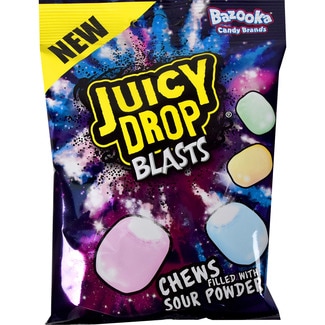
Examples found in ComerClaro Spanish product database
Product names and supermarket data may appear in Spanish.


Classification:
Statistics
242
total views
Something wrong?
If you notice incorrect or incomplete information, help us improve the platform.