Carrageenan
Score impact
-0.40
points/product
Description
Carrageenan (E407) is a natural food additive obtained from red algae (Rhodophyceae), mainly from the species Chondrus crispus, Eucheuma, Gigartina, and Iridaea. Industrially, it is extracted by hot alkaline treatment, followed by filtration, precipitation with alcohol or potassium salts, drying, and grinding.
Chemically, it is a linear polysaccharide composed of galactose and 3,6-anhydrogalactose units, with sulfate groups. There are three main types: kappa (firm gel with potassium ions), iota (elastic gel with calcium ions), and lambda (thickener without gelling). Its main function is to thicken, gel, and stabilize emulsions and suspensions.
It was discovered in Ireland in the 19th century and approved in the EU since 1974. EFSA re-evaluated its safety in 2018, establishing an Acceptable Daily Intake (ADI) of 0-75 mg/kg body weight (expressed as carrageenan). WHO/JECFA also considers it safe within this range. However, there is controversy regarding degraded carrageenan (poligeenan), which is not permitted as an additive.
Food-grade carrageenan is considered safe, although some animal studies suggest possible intestinal inflammatory effects. In the EU, it must be labeled as "carrageenan" or "E407" in the ingredient list.
It is important to note that the food safety of this additive has been supported by multiple evaluations, but moderation is recommended in people with inflammatory bowel diseases.
Carrageenan is used in a wide variety of foods as a thickener, gelling agent, and stabilizer. According to EC Regulation 1333/2008, it is authorized in numerous categories: dairy products (fermented milks, custards, ice cream, dairy desserts) up to 5000 mg/kg; plant-based beverages (soy milk, almond milk) up to 1000 mg/kg; sauces and dressings up to 5000 mg/kg; meat products (cold cuts, pâtés) up to 5000 mg/kg; confectionery (gummies, candies) up to 10000 mg/kg; and infant foods (infant formulas) up to 300 mg/kg.
In the Spanish market, it is found in brands such as Danone (yogurts), Nestlé (ice cream), Hacendado (evaporated milk), and vegan products like oat drinks. Compared to the FDA, limits in the US are similar, although the FDA allows its use in organic foods. Japan also authorizes it with similar restrictions. Carrageenan is especially valued for its ability to form thermoreversible gels and stabilize emulsions without the need for heat.
Documented side effects of food-grade carrageenan are limited. EFSA in its 2018 re-evaluation concluded that there is no evidence of adverse effects in humans at current intake levels. However, some animal studies have shown that very high doses (above 1000 mg/kg/day) can cause intestinal inflammation and ulcers.
The proposed mechanism is activation of the NF-κB pathway and production of pro-inflammatory cytokines. Sensitive populations include people with inflammatory bowel disease (IBD) such as Crohn's or ulcerative colitis, although there are no conclusive human studies. No interactions with medications have been reported. WHO/JECFA also considers it safe, but warns that degraded carrageenan (poligeenan) should not be used as an additive.
In conclusion, for the general population, carrageenan is safe within established limits, but caution is recommended in people with IBD. Controversy persists due to animal studies and possible contamination with poligeenan.
- Carrageenan
- Carrageenin
- Carrageen gum
- Irish moss
- Chondrus crispus
- Red algae extract
- Furcelleran
- Refined carrageenan
- Semi-refined carrageenan
- Kappa-carrageenan
- Iota-carrageenan
- Lambda-carrageenan
- Ammonium, calcium, potassium, or sodium salt of galactose sulfate esters
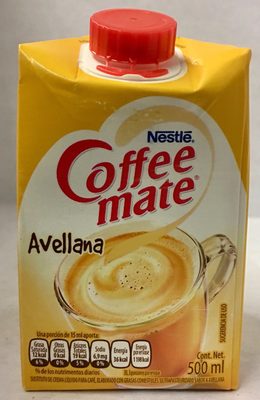
Products in our Spanish database containing this additive
Examples found in ComerClaro Spanish product database
Product names and supermarket data may appear in Spanish.


Classification:
Statistics
347
total views
Something wrong?
If you notice incorrect or incomplete information, help us improve the platform.