Ammonium Bicarbonate (Acid Salt)
Score impact
0.00
points/product
Description
The food additive E503ii, technically known as ammonium hydrogen carbonate or ammonium bicarbonate, is an ammonium salt of carbonic acid. It appears as a white crystalline solid or granular powder that emits a slight characteristic odor of ammonia.
It is a highly volatile compound that completely decomposes when heated (above 60°C), transforming into carbon dioxide, water, and ammonia gas. This property of total evaporation without leaving solid residues distinguishes it from other leavening agents such as sodium bicarbonate. Industrially, it is produced by reacting carbon dioxide with aqueous ammonia solutions under controlled pressure and temperature conditions.
Its main function in food technology is as a leavening agent or chemical raising agent. Being thermally unstable, it acts very quickly during the baking process, creating gas bubbles that expand the dough and generate an extremely airy and crispy structure. In addition to its role as a raising agent, it also acts as an acidity regulator in specific industrial processes, although its use is conditioned by the ability of the final product to release the produced gases and avoid residual flavors.
The safety of E503ii has been thoroughly evaluated by the European Food Safety Authority (EFSA) and JECFA (FAO/WHO). Both bodies consider it a safe additive for human consumption and have not established a limit for Acceptable Daily Intake (ADI), as the resulting components from its decomposition are naturally processed by the body or evaporate during cooking. In the European Union, its use is authorized under the quantum satis principle, allowing the industry to use the minimum dose necessary to achieve the desired technical effect.
Ammonium hydrogen carbonate is an indispensable ingredient in the manufacture of bakery and pastry products with low moisture content, where a very dry and brittle texture is desired. Its use is predominant in the production of cracker-type cookies, wafers, gingerbread cookies, and industrial puff pastry.
The technical reason for its application in these specific products is that, being thin and dry pieces, they allow the ammonia gas to be completely released into the oven atmosphere, preventing it from being trapped inside the food. Conversely, its use is not recommended in sponge cakes or products with moist and thick crumb, as the gas could be retained, altering the flavor and pH of the product.
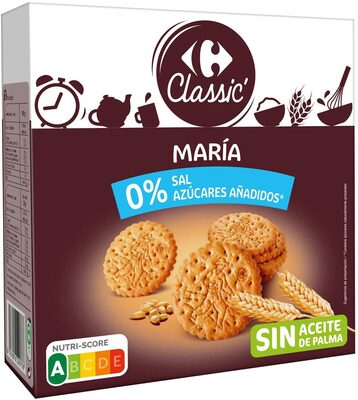
In the context of the Spanish market, E503ii is a common ingredient in the labeling of cookies and snacks from major consumer brands available at Mercadona (Hacendado), Carrefour, Lidl, or Día. It is especially frequent in traditional breakfast cookies, Maria cookies, and in typical local pastry products that require an airy but firm texture.
The regulatory framework supporting its use is Regulation EC 1333/2008, which allows its use in a wide variety of processed food categories. Internationally, the US FDA recognizes it as a GRAS (Generally Recognized as Safe) substance, highlighting its usefulness in baked goods where the final moisture content is less than 5%.
From a health perspective, E503ii has an excellent safety profile and is not associated with significant adverse effects at the doses used by the food industry. When ingested in the minimal traces that may remain in a well-baked product, the ammonium ion is converted into urea by the liver and eliminated through urine, following the normal metabolic pathways of the human body. Toxicological studies have shown no evidence of carcinogenicity, mutagenicity, or reproductive toxicity.
The main drawback of ammonium hydrogen carbonate is not health-related, but occupational or domestic during the cooking process. When heated, the massive release of ammonia vapors can be irritating to the eyes and respiratory tract if the work area or kitchen is not properly ventilated. However, once the food has cooled, the ammonia has completely dissipated, and the product is entirely safe for any population group, including children and the elderly.
No allergic reactions or intolerances associated with this additive have been documented, establishing it as a safe and efficient technological tool in global food production.
- Ammonium bicarbonate
- Ammonium hydrogen carbonate
- Bicarbonate of ammonia
Products in our Spanish database containing this additive
Examples found in ComerClaro Spanish product database
Product names and supermarket data may appear in Spanish.


Classification:
Statistics
283
total views
Something wrong?
If you notice incorrect or incomplete information, help us improve the platform.