L-cysteine
Score impact
0.00
points/product
Description
The food additive E920, also known as L-cysteine, is a non-essential amino acid used in the food industry mainly as a dough improver in bakery and pastry products. Its primary function is to act as a reducing agent for disulfide bonds in gluten proteins, which facilitates kneading and improves the texture and volume of bread. L-cysteine can be obtained from two main sources: by hydrolysis of animal keratin (from feathers, bristles, or hooves) or by chemical synthesis.
In the European Union, its use in organic foods is only allowed if it is of synthetic origin. From a physicochemical standpoint, L-cysteine is a white crystalline powder, soluble in water, with a melting point of 240 °C (decomposition). Its history as an additive dates back to the mid-20th century, when its ability to modify the rheological properties of doughs was discovered. It was approved in the EU as a food additive in Directive 95/2/EC and subsequently in Regulation (EC) 1333/2008.
EFSA has evaluated its safety on several occasions, most recently in 2017, establishing an Acceptable Daily Intake (ADI) of 0-7 mg/kg body weight. WHO, through JECFA, has also evaluated it and set a similar ADI. Regarding food safety, EFSA concludes that there are no safety concerns at authorized use levels. However, there is controversy due to its possible animal origin, leading many vegetarian and vegan consumers to avoid products containing it.
On labeling, it must appear as "L-cysteine" or "E920". Although it is not considered an allergen, people with allergies to feathers or animal hair could have reactions, although there are no conclusive studies.
In summary, E920 is an effective and safe additive within established limits, but its origin raises ethical debate.
E920 is mainly used in the category of flour treatment agents, i.e., as a dough improver in bakery, pastry, and industrial baked goods. It is found in products such as sliced bread, rolls, buns, cookies, pre-cooked pizzas, and frozen doughs.
In the Spanish market, brands like Bimbo, Panrico, or Dulcesol include it in some of their products. According to Regulation (EC) 1333/2008, the maximum authorized dose is 75 mg/kg of flour (expressed as L-cysteine). There are no specific limits for other foods, but its use is restricted to fine bakery wares and biscuits. In the United States, the FDA considers it GRAS (Generally Recognized as Safe) and allows its use in baking without a specific limit, although good manufacturing practices limit its quantity. In Japan, it is also permitted with similar restrictions.
It is important to note that in the EU, for organic products, only L-cysteine of synthetic origin is allowed, not that of animal origin.
EFSA and WHO have evaluated L-cysteine as a food additive and conclude that it does not present significant adverse effects at authorized doses. Toxicological studies have shown no mutagenicity, carcinogenicity, or reproductive toxicity. The ADI of 0-7 mg/kg body weight is widely safe, as the estimated dietary intake is much lower.
No side effects have been documented in the general population. However, there is a theoretical concern for people with allergies to feathers or animal hair, as L-cysteine of animal origin could contain traces of allergens. Nevertheless, no studies confirm specific allergic reactions. No interactions with medications have been reported either.
In conclusion, EFSA and WHO consider E920 safe under authorized conditions of use, and no relevant adverse effects have been identified.
- L-cysteine
- Cysteine
- (R)-2-amino-3-mercaptopropanoic acid
- Cysteine hydrochloride
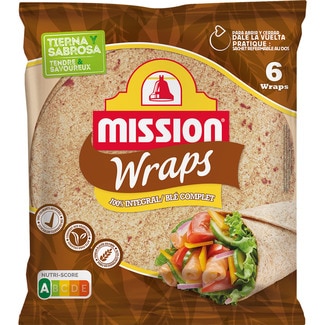
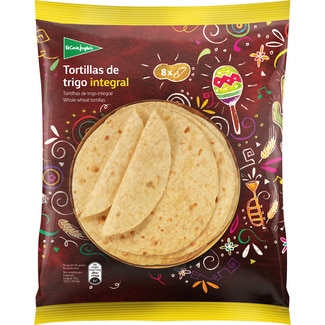
Products in our Spanish database containing this additive
Examples found in ComerClaro Spanish product database
Product names and supermarket data may appear in Spanish.

Classification:
Statistics
276
total views
Something wrong?
If you notice incorrect or incomplete information, help us improve the platform.