Steviol glycosides from Stevia
Score impact
+0.10
points/product
Description
The food additive E960A, called steviol glycosides from Stevia, is a high-intensity natural sweetener obtained from the leaves of the Stevia rebaudiana Bertoni plant. Native to Paraguay and Brazil, stevia has been traditionally used by the Guaraní people as a sweetener. Industrially, steviol glycosides are extracted through a process of maceration in hot water, followed by purification with ion exchange resins and crystallization.
The main compounds are stevioside and rebaudioside A, which provide a sweetening power 200 to 300 times greater than sugar (sucrose). They are stable to heat and acidic pH, making them suitable for baked goods and carbonated beverages. Their primary function is to sweeten without adding significant calories, making them ideal for low-calorie diets and for people with diabetes.
The history of their approval in the European Union began in 2011, when the European Commission authorized their use following a positive evaluation by the European Food Safety Authority (EFSA). EFSA established an Acceptable Daily Intake (ADI) of 4 mg per kg of body weight per day, expressed in steviol equivalents. The World Health Organization (WHO) also supports this ADI.
Regarding food safety, toxicological studies have not shown significant adverse effects in humans at permitted doses. Labeling must clearly indicate "sweetener: steviol glycosides" or "E960A", and in some cases include warnings about its natural origin. Globally, it is considered a safe and well-tolerated additive.
E960A is used in a wide variety of food categories, mainly as a tabletop sweetener, in non-alcoholic beverages (soft drinks, juices, flavored waters), dairy products (yogurts, desserts), confectionery (sugar-free gum, candies), breakfast cereals, sauces, and bakery products.
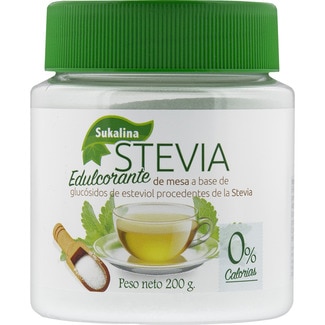
In the Spanish market, common examples include light soft drinks like Coca-Cola Zero (which combines E960A with other sweeteners), skimmed yogurts sweetened with stevia, and tabletop sweetener packets like Hacendado's Stevia. Permitted limits vary by category according to Regulation EC 1333/2008. For example, in non-alcoholic beverages the maximum limit is 80 mg/l (expressed in steviol equivalents), while in tabletop sweeteners it can reach up to 2000 mg/kg.
Compared to the FDA, which approved steviol glycosides as GRAS (Generally Recognized as Safe) in 2008, the EU was more cautious, but currently both agencies consider these compounds safe. Japan, a pioneer in their use since the 1970s, has similar regulations.
The versatility of E960A allows its use in products for diabetics and weight control diets.
Steviol glycosides (E960A) have been extensively studied and are considered safe at authorized doses. EFSA and WHO have established an ADI of 4 mg/kg body weight/day (expressed in steviol equivalents), which is not exceeded in a normal diet.
Documented side effects are mild and rare. Some people may experience gastrointestinal discomfort such as bloating or gas, especially if they consume large amounts, because the body does not fully metabolize the glycosides.
No carcinogenic, genotoxic, or reproductive effects have been reported in animal and human studies. Regarding sensitive populations, people with hypotension should exercise caution, as some in vitro studies suggest that stevioside may have a mild vasodilatory effect, although this has not been confirmed in humans at normal doses. No significant interactions with medications are known, although theoretically it could affect glucose metabolism in diabetic patients, but in practice it is considered beneficial.
The conclusion of EFSA and WHO is that E960A is safe for the general population, including children and pregnant women, as long as established limits are respected. No specific allergies to steviol glycosides have been documented.
- Steviol glycosides
- Stevioside
- Rebaudioside A
- Stevia extract
- Stevia sweetener
- Steviol glucosides
Products in our Spanish database containing this additive
Examples found in ComerClaro Spanish product database
Product names and supermarket data may appear in Spanish.

Classification:
Statistics
223
total views
Something wrong?
If you notice incorrect or incomplete information, help us improve the platform.